
Learner Variability Takes Center Stage at
Barnstable High School
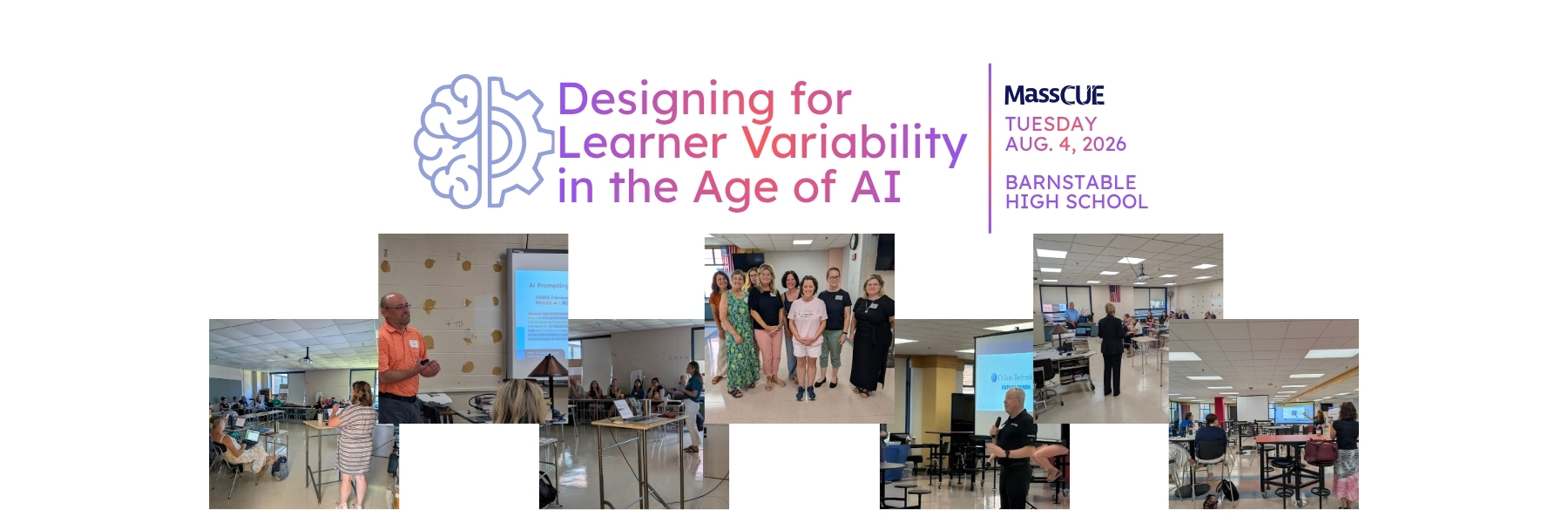
Educators from all over gathered at Barnstable High School for MassCUE’s Designing for Learner Variability in the Age of AI mini-conference on Aug. 4, 2026, and the energy in the building said it all. From learner-centered practices to instructional design basics to executive function and SEL strategies, the day was packed with ideas educators could put to use the very next day in their own classrooms.
Attendees left with fresh strategies for designing learning experiences that meet students where they are, and with a shared reminder that when we design for learner variability, we design for belonging. MassCUE is proud to support educators leading the way in inclusive, learner-centered design, and we're just getting started.
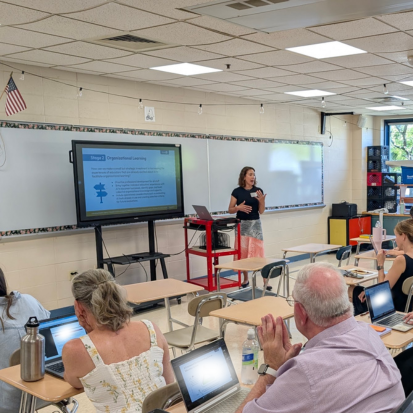
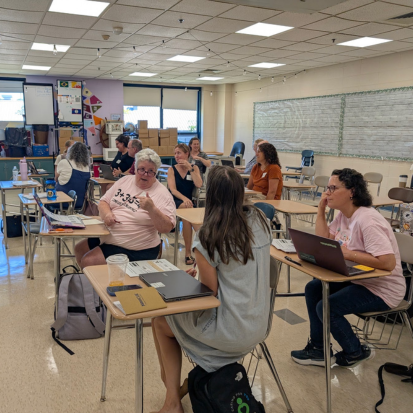
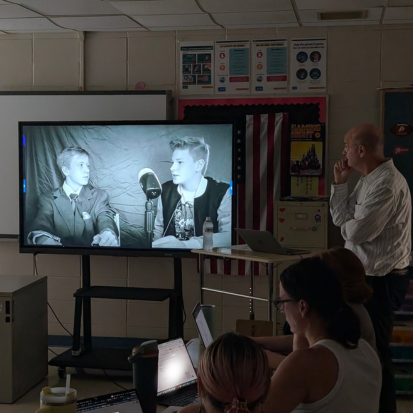
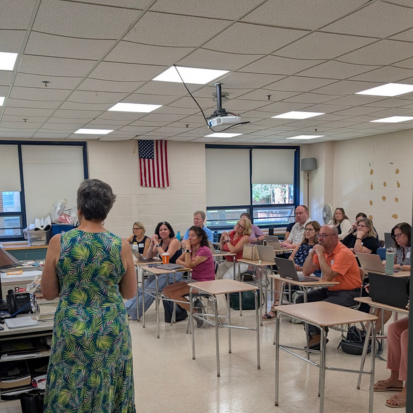
Special thank you to all of our presenters. Sessions Included:
Re-Thinking Literacy: Print, Digital and AI Successfully Converge — Brett Pierce
A model for re-balancing print and digital writing practices, integrating AI to expand student dialogue and make literacy more inclusive for the many students for whom print is not their primary means of communication.
What If the Problem Isn't the Student? Designing Classrooms that Support Regulation, Belonging, and Learner Success — Dr. Anne Katona Linn
Practical strategies for classrooms that strengthen self-regulation, executive functioning, engagement, and belonging, so every learner feels seen and capable of success.
Beyond Leveling: Using AI to Bridge the Gap to Complex Text — Edward Jacques, Sarah Hopson
Concrete ways to use generative AI to build scaffolds that let all students engage directly with complex, grade-level text rather than simplified versions of it.
Notice First: Self-Awareness as the Foundation for AI Literacy — Jacqui Heron Finn
A framework for building the self-awareness that turns AI into a genuine thinking partner in the classroom, starting with a personalized learner profile participants build for themselves.
AI as your New "Administrative Assistant": Leveraging AI to Improve Executive Functioning Skills in Secondary Classrooms — Joshua Dickson
A hands-on look at how generative AI can help secondary students break down assignments, build action plans, and grow more independent learners.
Using AI to Expand Access and Voice in Math — Karen Levin
Grounded in UDL and NCTM research, this session explores when AI genuinely opens up access, participation, and voice in math class, and when it gets in the way.
The Future of Literacy Is Flexible: Designing Reading and Writing in the Age of AI — Karen Janowski
Practical strategies for designing more flexible, inclusive literacy instruction that honors the Science of Reading while embracing what AI makes newly possible.
Unlocking Student Agency through Practical AI Supports — Vanessa Miller, Sarah Dully, Melissa O'Neill, Kristen Provost
Real classroom examples of AI tools like Read&Write and NotebookLM reducing barriers and helping students work more independently toward grade-level learning.
Designing Instruction That Promotes Independence: AI as a Cognitive Support — Karen Janowski
A look at how AI can function as a cognitive support, not a replacement, helping learners strengthen executive function, comprehension, and organizational skills through intentional instructional design.
Designed for All: Using AI to Build Flexible, Rigorous Learning Experiences — Heather Sweet
Strategies for using AI to differentiate at every stage of instruction, from surfacing prerequisite knowledge to building choice boards and tiered assignments.
Using Interactive Panels to Improve Engagement and Accessibility — Paul Hickey
A look at how interactive panel design, hardware and software alike, is driving improvements in classroom equity and inclusion.
Empowering Inclusivity: Support All Learners with Lumio — Sarah Storck
How Lumio's built-in and AI-powered tools, from Immersive Reader to real-time content adaptation, help create more equitable, personalized learning.
Beyond the Prompt: Teaching Students to Be Safe, Smart, and AI Ready — Suzanne McLaughlin
Practical strategies for building cybersecurity awareness, digital citizenship, and AI literacy so students can navigate an AI-powered world safely and critically.
Want More Days Like This One?
Days like this are only possible because of educators like you who show up, share ideas, and push the work forward. If you want to stay connected to opportunities like Designing for Learner Variability, become a MassCUE member and sign up for our newsletter so you never miss what's coming next.
Designing for Learner Variability in the Age of AI Sponsors
A special thank you to our generous sponsors who made this event possible: Avidex, Brisk Teaching, Custom Computer Specialist, and Ockers Technologies.


 Print this post